

GPS is Transforming to Become More “Conversational”—And It’s about Time
The latest in car news and reviews, no nonsense
Our complimentary daily newsletter brings you the most important stories directly to your inbox every weekday.
Built-in navigation systems were among the first instances of what we now refer to as "technology" in vehicles, but they have not kept pace with modern developments. In comparison to other voice-control systems that have become integral to daily life, most navigation systems now feel stiff and mechanical. However, a prominent name in GPS is aiming to change this.
TomTom, a key supplier in the automotive sector, announced a collaboration with SoundHound AI at CES 2026 to merge the latter's “conversational” AI technology with its navigation systems. This integration aims to provide a “natural, conversational voice interface that streamlines complex navigation tasks,” such as setting up routes with several waypoints and locating EV charging stations or other facilities, according to TomTom. This could address a frustrating drawback of many current navigation systems.
Certain car manufacturers—like the German trio of Audi, BMW, and Mercedes-Benz—have introduced natural-language voice recognition systems that comprehend casual human speech. Nevertheless, this technology hasn’t yet advanced to the level of standalone GPS devices that may not seamlessly work with the sophisticated infotainment systems found in luxury vehicles. Consequently, drivers often have to phrase their commands precisely to receive a response, and the voices that provide navigation directions frequently sound as artificial as they actually are.
Considering the improvements in other types of voice recognition, it's surprising that many navigation systems still fall short. The experience you receive from Siri or Google Assistant on your phone is likely superior, which is partly why Apple CarPlay and Android Auto remain popular choices. If car manufacturers want their in-house systems to be widely adopted, this issue must be resolved.
This is why, amid the many business announcements at CES, this particular development deserves attention. A more naturally sounding interface could significantly enhance the experience and be a genuinely useful application of AI. While AI may struggle to gauge damage to rental cars, it excels at detecting patterns in human speech and replicating them with relative precision.
TomTom plans to offer the AI voice assistant alongside its navigation systems as a ready-to-use package for automakers, allowing them to incorporate it into their own infotainment setups. While no specific agreements have been confirmed yet, it's clear that the automotive industry is embracing the AI trend. At CES, Ford also revealed its own AI assistant, which is expected to appear in vehicles starting in 2027.
Other articles
 For $80,000, you could purchase an authentic Mercedes or a Chinese SUV that mimics one. | Carscoops
Tank 300 receives a bold Brabus-inspired transformation from Thai tuner Shana, featuring imitation quad exhausts, a striking interior, and a surprisingly high price.
For $80,000, you could purchase an authentic Mercedes or a Chinese SUV that mimics one. | Carscoops
Tank 300 receives a bold Brabus-inspired transformation from Thai tuner Shana, featuring imitation quad exhausts, a striking interior, and a surprisingly high price.
 AEV's New Ford FXL Package Will Elevate Your Super Duty with 40-Inch Tires
AEV's New Ford FXL Package Will Elevate Your Super Duty with 40-Inch Tires
AEV's New Ford FXL Package Will Elevate Your Super Duty with 40-Inch Tires
 Are We on the Brink of an Electric Motor RPM Race?
A recent report predicts that electric vehicle motors may achieve speeds of 30,000 rpm in the near future.
Are We on the Brink of an Electric Motor RPM Race?
A recent report predicts that electric vehicle motors may achieve speeds of 30,000 rpm in the near future.
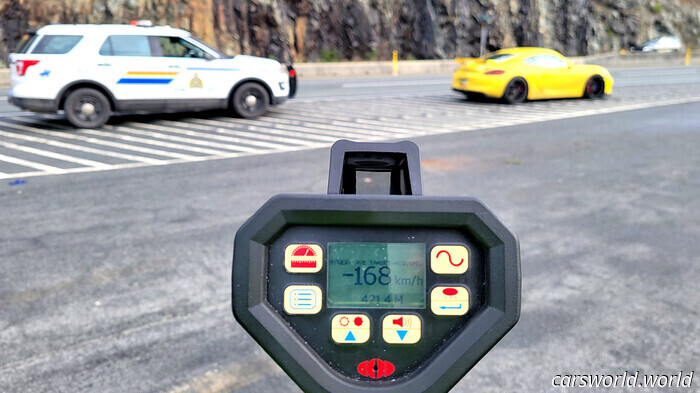 For her birthday, she drove a Cayman GT4, but the police confiscated it afterwards | Carscoops
On Christmas, police in British Columbia seized 14 vehicles and apprehended several speeders on December 30 along the well-known Sea to Sky Highway.
For her birthday, she drove a Cayman GT4, but the police confiscated it afterwards | Carscoops
On Christmas, police in British Columbia seized 14 vehicles and apprehended several speeders on December 30 along the well-known Sea to Sky Highway.
 This artist produces Porsche 911 components using marble.
Even a meticulously cared-for vintage 911 can't endure through time like these masterpieces.
This artist produces Porsche 911 components using marble.
Even a meticulously cared-for vintage 911 can't endure through time like these masterpieces.
GPS is Transforming to Become More “Conversational”—And It’s about Time
AI has the potential to make navigation directions sound as they ideally should have from the beginning.