

Are We on the Brink of an Electric Motor RPM Race?
The latest car news and reviews, with no nonsense.
Subscribe to our free daily newsletter to receive the most important stories straight to your inbox every weekday.
Internal-combustion engines are achieving remarkable feats in terms of rotational speed. The Lamborghini Temerario features a 4.0-liter twin-turbo V8 that can sustain up to 10,000 rpm, while the Red Bull RB17 boasts a custom V10 that hits 15,000 rpm. However, even these high-revving engines cannot compete with electric motors.
For electric vehicles, reaching five-digit rpm is merely the beginning. A new report from research firm IDTechEx reveals that the motors in typical electric vehicles can already reach 15,000 rpm, and certain new models may even double that figure. By 2025, Chinese manufacturers BYD, Xiaomi, and GAC have indicated they will have motors capable of 30,000 rpm, although current resistance to Chinese cars means these models won’t be available in the United States anytime soon, though we can still appreciate the engineering feats from a distance.
Electric motors have the advantage of being able to operate at higher speeds than combustion engines due to their lighter components. This characteristic also explains how Mazda rotary engines could easily achieve rpms far exceeding those of contemporary piston engines. Unlike combustion engines, electric motors deliver maximum horsepower and torque without needing to be revved up, and without an engine sound, revving an electric motor lacks the thrill associated with pushing a combustion engine to its limits.
What advantages do higher-rpm electric motors offer? It primarily revolves around power density—the amount of power generated from a motor of a specific size. Increased rpm allows for more compact motors without compromising power or enables a power boost without enlarging the motor. The report indicates that raising the rpm from 10,000 to 20,000 results in a 69% increase in power density for the radial-flux motors found in most current EVs, while achieving 30,000 rpm yields a 41% increase.
However, the report highlights that higher rpm introduces various engineering challenges. This includes more parasitic losses that can decrease efficiency and increased centrifugal force that places additional stress on the rotor. Enhanced cooling systems are also necessary, along with at least one added gear ratio to accommodate such high speeds. Many of these challenges can be overcome, as evidenced by some electric vehicles like the Porsche Taycan and the Mercedes-Benz CLA-Class, which already utilize two-speed transmissions. Additionally, smaller-diameter rotors might help reduce centrifugal force.
Addressing these challenges could pave the way for even more compact motors, thus freeing up additional space for passengers and cargo, or possibly enabling tri- or quad-motor configurations to enhance overall vehicle output. And even without the roar of an exhaust, a motor that reaches 30,000 rpm is undeniably impressive.
Have a tip about future technology? Contact us at [email protected]


Other articles
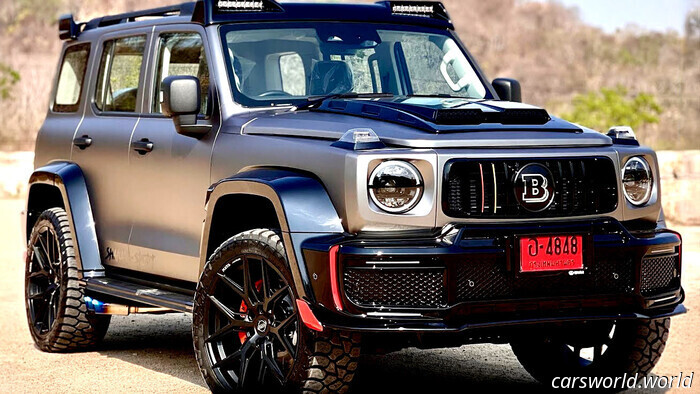 For $80,000, you could purchase an authentic Mercedes or a Chinese SUV that mimics one. | Carscoops
Tank 300 receives a bold Brabus-inspired transformation from Thai tuner Shana, featuring imitation quad exhausts, a striking interior, and a surprisingly high price.
For $80,000, you could purchase an authentic Mercedes or a Chinese SUV that mimics one. | Carscoops
Tank 300 receives a bold Brabus-inspired transformation from Thai tuner Shana, featuring imitation quad exhausts, a striking interior, and a surprisingly high price.
 GPS is Transforming to Become More “Conversational”—And It’s about Time
AI has the potential to make navigation directions sound as they ideally should have from the beginning.
GPS is Transforming to Become More “Conversational”—And It’s about Time
AI has the potential to make navigation directions sound as they ideally should have from the beginning.
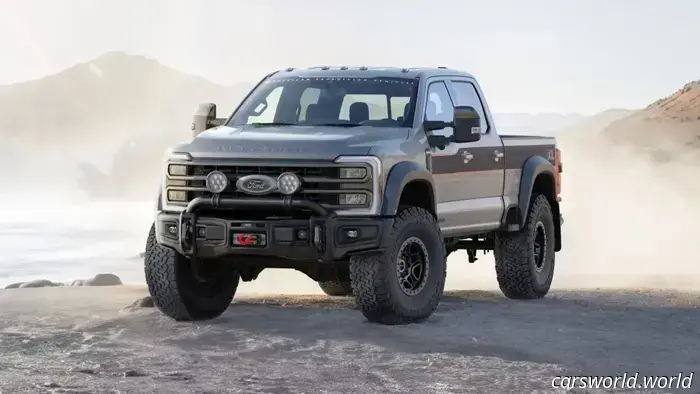 AEV's New Ford FXL Package Will Elevate Your Super Duty with 40-Inch Tires
AEV's New Ford FXL Package Will Elevate Your Super Duty with 40-Inch Tires
AEV's New Ford FXL Package Will Elevate Your Super Duty with 40-Inch Tires
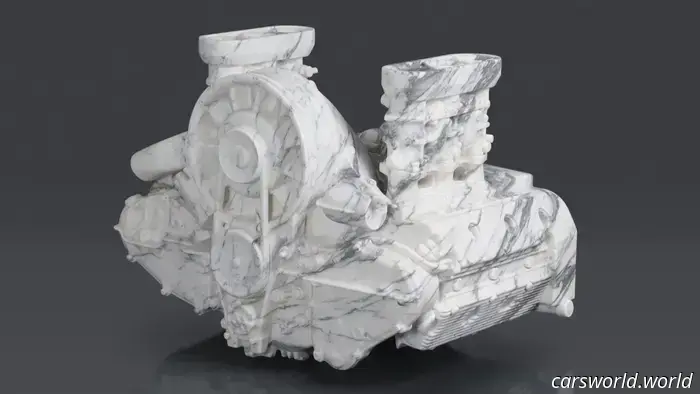 This artist produces Porsche 911 components using marble.
Even a meticulously cared-for vintage 911 can't endure through time like these masterpieces.
This artist produces Porsche 911 components using marble.
Even a meticulously cared-for vintage 911 can't endure through time like these masterpieces.
Are We on the Brink of an Electric Motor RPM Race?
A recent report predicts that electric vehicle motors may achieve speeds of 30,000 rpm in the near future.