

Tesla Owners Are Equipping Escape Tools Before It's Too Late | Carscoops
Manual release handles in some Teslas are often hidden away, prompting drivers and passengers to prepare for emergencies with DIY solutions.
Tesla's door release mechanisms differ significantly by model and seat placement.
Some owners have invested in glass breakers for emergencies.
After accidents, finding manual latches quickly can be challenging.
If you're in the market for a new vehicle, especially one with a high safety rating like a Tesla, it may come as a surprise that during certain incidents, the car's electric doors have not opened as intended. There have been reports of passengers being trapped inside, unable to escape, and in some cases, even emergency personnel struggled to get the retractable doors open from the outside.
Read: How to Open Tesla Doors When Power Is Lost in an Emergency
Tesla does provide manual door releases in both front and rear seats for its newer models, but many owners are unaware of their location. Depending on the model year, these latches can be obscured. When faced with the chaos and urgency of a crash, this can lead to a dangerous situation.
Following several tragic accidents where occupants were unable to escape in time, Tesla owners have taken proactive measures.
What Happens If the Power Fails?
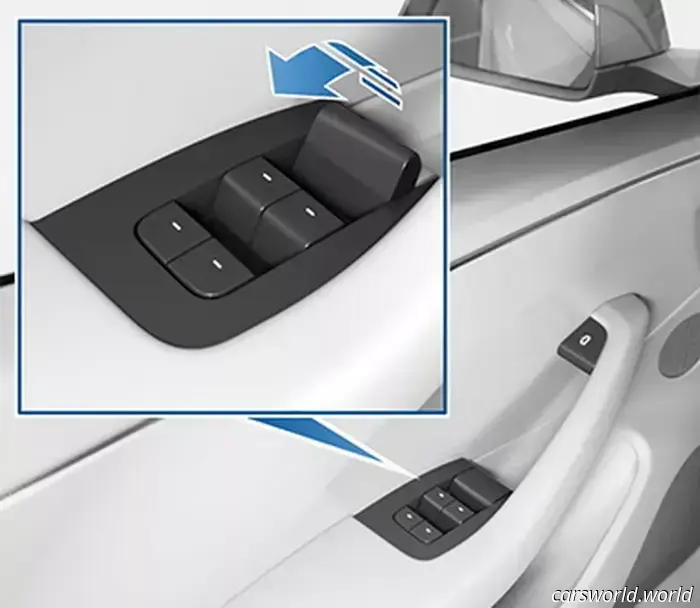
Increasingly, Tesla owners are purchasing glass breakers to ensure they can escape if trapped. For the Model 3, Model Y, Model X, Model S, and Cybertruck, there’s some peace of mind. The front doors feature an easily accessible mechanical latch next to the side window switches, making it relatively straightforward to exit in the event of a power failure, provided users know it's there.
However, rear seat passengers encounter a more complex escape process. For instance, in Model 3s manufactured from 2024 onward, rear passengers must remove a piece of plastic from the door pocket and pull a loop to manually release the door. This setup is similar in the Model Y and the Cybertruck as well.
The Model X presents a more complicated and potentially hazardous situation, as the rear speaker grille must be removed to access a cord for opening the door. In the Model S, the manual release cable is hidden beneath the carpet under the seats.
Older Model 3s built before 2023 lack a manual release altogether, making it advisable for anyone in the rear of a Tesla to have a glass breaker within easy reach.
Innovative Solutions Emerge
Independent reports indicate that some resourceful Tesla owners have begun marketing accessories to simplify access and use of manual door latches.
A quick online search reveals a niche market focused on these solutions, with offerings like custom cords from Tesery and EV Dynamics. There are also many other products available on Amazon, including those from SWLOR and YONZEE, along with various pull-cord kits designed for different Tesla models.
Additionally, rideshare drivers using Tesla models have started informing passengers about how to exit the vehicle if they become trapped after a crash.
One such driver, Chad Lincoln, an Uber driver in Tennessee, now gives a brief "flight attendant" style announcement to new passengers in his Model 3, detailing how to locate and operate the emergency door release.
Tesla is aware of these concerns. In September, chief designer Franz von Holzhausen confirmed that the company is working on redesigning the door handles, stating that combining the electric and manual releases into a single button "makes a lot of sense."

Other articles
 Numerous Chinese electric vehicle brands might face collapse within the upcoming year | Carscoops
Selling cars is one aspect, but achieving profitability without substantial incentives is becoming increasingly challenging for many of China's EV manufacturers as policy support starts to diminish.
Numerous Chinese electric vehicle brands might face collapse within the upcoming year | Carscoops
Selling cars is one aspect, but achieving profitability without substantial incentives is becoming increasingly challenging for many of China's EV manufacturers as policy support starts to diminish.
 $40 Million Worth of Rare Superbikes Confiscated from Canadian Olympian Turned Kingpin | Carscoops
Ryan Wedding, a former Olympic snowboarder, is currently embroiled in a global drug case linked to tens of millions worth of exotic cars and motorcycles.
$40 Million Worth of Rare Superbikes Confiscated from Canadian Olympian Turned Kingpin | Carscoops
Ryan Wedding, a former Olympic snowboarder, is currently embroiled in a global drug case linked to tens of millions worth of exotic cars and motorcycles.
 The Karma Revero Is No More, Yet Its Fisker Heritage Lives On | Carscoops
The Karma Revero ceases production, but the aluminum spaceframe foundation of the EREV sedan will persist in its successor.
The Karma Revero Is No More, Yet Its Fisker Heritage Lives On | Carscoops
The Karma Revero ceases production, but the aluminum spaceframe foundation of the EREV sedan will persist in its successor.
 This Hummer Resembles a Batmobile Stranded in Space | Carscoops
A highly customized Hummer H1 equipped with 44-inch tires and suicide doors is set to appear at Mecum Kissimmee 2026.
This Hummer Resembles a Batmobile Stranded in Space | Carscoops
A highly customized Hummer H1 equipped with 44-inch tires and suicide doors is set to appear at Mecum Kissimmee 2026.
 A new kit from Damd modifies the Mitsubishi Delica Mini without making significant changes that would drive up the price.
The Damd "Dali" kit transforms the Delica Mini into a vintage Pajero.
This kit features a boxy grille, nostalgic lights, bumper accents, and decals.
Its design pays homage to Mitsubishi’s classic 1980s off-roader.
The Mitsubishi Delica Mini is noted for being one of Japan’s most interesting kei cars, combining the charming proportions of a compact urban vehicle with elements taken from off-road vehicles. This unique combination provided Damd with an ideal base for a retro-styled kit, evoking the spirit of the original Pajero from the 1980s.
The Delica Mini was launched in the spring of 2023 and received a facelift in the autumn of 2025. Damd's version, called “Dali” (short for Dakar Rally), is built on the updated model.
The modifications include a vintage-style front, new graphics, and a selection of accessories that enhance the off-road aesthetic while remaining true to the kei car design.
Key Retro Features within Kei Constraints
The standout feature of the design is the round headlights with separate indicators, reminiscent of the first generation Pajero (also known as Montero and Shogun in some markets). The matte black headlight housing is linked to the boxy grille, which has a unique opening for the original Mitsubishi emblem that accommodates the ADAS sensors.
Rather than redesigning the front bumper, Damd retained the original panel and added an elegant garnish with glossy black and aluminum-like finishes. This alteration changes the look while preserving the factory sensors and cooling intakes, as well as the embedded Delica lettering.
The Damd Dali (above) compared to the Mitsubishi Delica Mini (below)
The new features do not alter the kei car's dimensions, maintaining the 3,395 mm (133.7 inches) length and 1,475 mm (58.1 inches) width, both of which are subject to regulations. The tuner also kept the original Beige color, complementing it with a custom decal set that introduces matte black and wood-textured inserts along the side.
The demonstration model is fitted with 15-inch Damd Cantabile alloys wrapped in 165/56R15 tires, providing extra grip for the compact vehicle. A roof basket enhances the exterior, while interior modifications are still being finalized. Seat covers are anticipated to complete the transformation.
Even though the design embraces a full safari look, the performance remains unaltered. There are no mechanical enhancements included in the kit. The most powerful version of the Delica Mini is equipped with a turbocharged 660cc three-cylinder engine generating 63 horsepower and 100 Nm of torque.
This engine is paired with a CVT transmission and, in certain versions, a full-time 4WD system. This 4WD option seems to align perfectly with a Pajero-inspired design, despite it leaning more toward aesthetics than performance.
Coming Soon to Japan
Damd has announced that the components are nearing the final stages of development and will soon be available in Japan. While pricing details have not been disclosed, the company suggests it will be affordable, owing to the modest adjustments that fit within the vehicle's existing framework.
The Dali will be showcased at the Damd booth during the Tokyo Auto Salon 2026, alongside a Lancia-inspired Suzuki Jimny and a couple of vintage-style Honda minivans.
A new kit from Damd modifies the Mitsubishi Delica Mini without making significant changes that would drive up the price.
The Damd "Dali" kit transforms the Delica Mini into a vintage Pajero.
This kit features a boxy grille, nostalgic lights, bumper accents, and decals.
Its design pays homage to Mitsubishi’s classic 1980s off-roader.
The Mitsubishi Delica Mini is noted for being one of Japan’s most interesting kei cars, combining the charming proportions of a compact urban vehicle with elements taken from off-road vehicles. This unique combination provided Damd with an ideal base for a retro-styled kit, evoking the spirit of the original Pajero from the 1980s.
The Delica Mini was launched in the spring of 2023 and received a facelift in the autumn of 2025. Damd's version, called “Dali” (short for Dakar Rally), is built on the updated model.
The modifications include a vintage-style front, new graphics, and a selection of accessories that enhance the off-road aesthetic while remaining true to the kei car design.
Key Retro Features within Kei Constraints
The standout feature of the design is the round headlights with separate indicators, reminiscent of the first generation Pajero (also known as Montero and Shogun in some markets). The matte black headlight housing is linked to the boxy grille, which has a unique opening for the original Mitsubishi emblem that accommodates the ADAS sensors.
Rather than redesigning the front bumper, Damd retained the original panel and added an elegant garnish with glossy black and aluminum-like finishes. This alteration changes the look while preserving the factory sensors and cooling intakes, as well as the embedded Delica lettering.
The Damd Dali (above) compared to the Mitsubishi Delica Mini (below)
The new features do not alter the kei car's dimensions, maintaining the 3,395 mm (133.7 inches) length and 1,475 mm (58.1 inches) width, both of which are subject to regulations. The tuner also kept the original Beige color, complementing it with a custom decal set that introduces matte black and wood-textured inserts along the side.
The demonstration model is fitted with 15-inch Damd Cantabile alloys wrapped in 165/56R15 tires, providing extra grip for the compact vehicle. A roof basket enhances the exterior, while interior modifications are still being finalized. Seat covers are anticipated to complete the transformation.
Even though the design embraces a full safari look, the performance remains unaltered. There are no mechanical enhancements included in the kit. The most powerful version of the Delica Mini is equipped with a turbocharged 660cc three-cylinder engine generating 63 horsepower and 100 Nm of torque.
This engine is paired with a CVT transmission and, in certain versions, a full-time 4WD system. This 4WD option seems to align perfectly with a Pajero-inspired design, despite it leaning more toward aesthetics than performance.
Coming Soon to Japan
Damd has announced that the components are nearing the final stages of development and will soon be available in Japan. While pricing details have not been disclosed, the company suggests it will be affordable, owing to the modest adjustments that fit within the vehicle's existing framework.
The Dali will be showcased at the Damd booth during the Tokyo Auto Salon 2026, alongside a Lancia-inspired Suzuki Jimny and a couple of vintage-style Honda minivans.
A new kit from Damd modifies the Mitsubishi Delica Mini without making significant changes that would drive up the price.
The Damd "Dali" kit transforms the Delica Mini into a vintage Pajero.
This kit features a boxy grille, nostalgic lights, bumper accents, and decals.
Its design pays homage to Mitsubishi’s classic 1980s off-roader.
The Mitsubishi Delica Mini is noted for being one of Japan’s most interesting kei cars, combining the charming proportions of a compact urban vehicle with elements taken from off-road vehicles. This unique combination provided Damd with an ideal base for a retro-styled kit, evoking the spirit of the original Pajero from the 1980s.
The Delica Mini was launched in the spring of 2023 and received a facelift in the autumn of 2025. Damd's version, called “Dali” (short for Dakar Rally), is built on the updated model.
The modifications include a vintage-style front, new graphics, and a selection of accessories that enhance the off-road aesthetic while remaining true to the kei car design.
Key Retro Features within Kei Constraints
The standout feature of the design is the round headlights with separate indicators, reminiscent of the first generation Pajero (also known as Montero and Shogun in some markets). The matte black headlight housing is linked to the boxy grille, which has a unique opening for the original Mitsubishi emblem that accommodates the ADAS sensors.
Rather than redesigning the front bumper, Damd retained the original panel and added an elegant garnish with glossy black and aluminum-like finishes. This alteration changes the look while preserving the factory sensors and cooling intakes, as well as the embedded Delica lettering.
The Damd Dali (above) compared to the Mitsubishi Delica Mini (below)
The new features do not alter the kei car's dimensions, maintaining the 3,395 mm (133.7 inches) length and 1,475 mm (58.1 inches) width, both of which are subject to regulations. The tuner also kept the original Beige color, complementing it with a custom decal set that introduces matte black and wood-textured inserts along the side.
The demonstration model is fitted with 15-inch Damd Cantabile alloys wrapped in 165/56R15 tires, providing extra grip for the compact vehicle. A roof basket enhances the exterior, while interior modifications are still being finalized. Seat covers are anticipated to complete the transformation.
Even though the design embraces a full safari look, the performance remains unaltered. There are no mechanical enhancements included in the kit. The most powerful version of the Delica Mini is equipped with a turbocharged 660cc three-cylinder engine generating 63 horsepower and 100 Nm of torque.
This engine is paired with a CVT transmission and, in certain versions, a full-time 4WD system. This 4WD option seems to align perfectly with a Pajero-inspired design, despite it leaning more toward aesthetics than performance.
Coming Soon to Japan
Damd has announced that the components are nearing the final stages of development and will soon be available in Japan. While pricing details have not been disclosed, the company suggests it will be affordable, owing to the modest adjustments that fit within the vehicle's existing framework.
The Dali will be showcased at the Damd booth during the Tokyo Auto Salon 2026, alongside a Lancia-inspired Suzuki Jimny and a couple of vintage-style Honda minivans.
A new kit from Damd modifies the Mitsubishi Delica Mini without making significant changes that would drive up the price.
The Damd "Dali" kit transforms the Delica Mini into a vintage Pajero.
This kit features a boxy grille, nostalgic lights, bumper accents, and decals.
Its design pays homage to Mitsubishi’s classic 1980s off-roader.
The Mitsubishi Delica Mini is noted for being one of Japan’s most interesting kei cars, combining the charming proportions of a compact urban vehicle with elements taken from off-road vehicles. This unique combination provided Damd with an ideal base for a retro-styled kit, evoking the spirit of the original Pajero from the 1980s.
The Delica Mini was launched in the spring of 2023 and received a facelift in the autumn of 2025. Damd's version, called “Dali” (short for Dakar Rally), is built on the updated model.
The modifications include a vintage-style front, new graphics, and a selection of accessories that enhance the off-road aesthetic while remaining true to the kei car design.
Key Retro Features within Kei Constraints
The standout feature of the design is the round headlights with separate indicators, reminiscent of the first generation Pajero (also known as Montero and Shogun in some markets). The matte black headlight housing is linked to the boxy grille, which has a unique opening for the original Mitsubishi emblem that accommodates the ADAS sensors.
Rather than redesigning the front bumper, Damd retained the original panel and added an elegant garnish with glossy black and aluminum-like finishes. This alteration changes the look while preserving the factory sensors and cooling intakes, as well as the embedded Delica lettering.
The Damd Dali (above) compared to the Mitsubishi Delica Mini (below)
The new features do not alter the kei car's dimensions, maintaining the 3,395 mm (133.7 inches) length and 1,475 mm (58.1 inches) width, both of which are subject to regulations. The tuner also kept the original Beige color, complementing it with a custom decal set that introduces matte black and wood-textured inserts along the side.
The demonstration model is fitted with 15-inch Damd Cantabile alloys wrapped in 165/56R15 tires, providing extra grip for the compact vehicle. A roof basket enhances the exterior, while interior modifications are still being finalized. Seat covers are anticipated to complete the transformation.
Even though the design embraces a full safari look, the performance remains unaltered. There are no mechanical enhancements included in the kit. The most powerful version of the Delica Mini is equipped with a turbocharged 660cc three-cylinder engine generating 63 horsepower and 100 Nm of torque.
This engine is paired with a CVT transmission and, in certain versions, a full-time 4WD system. This 4WD option seems to align perfectly with a Pajero-inspired design, despite it leaning more toward aesthetics than performance.
Coming Soon to Japan
Damd has announced that the components are nearing the final stages of development and will soon be available in Japan. While pricing details have not been disclosed, the company suggests it will be affordable, owing to the modest adjustments that fit within the vehicle's existing framework.
The Dali will be showcased at the Damd booth during the Tokyo Auto Salon 2026, alongside a Lancia-inspired Suzuki Jimny and a couple of vintage-style Honda minivans.
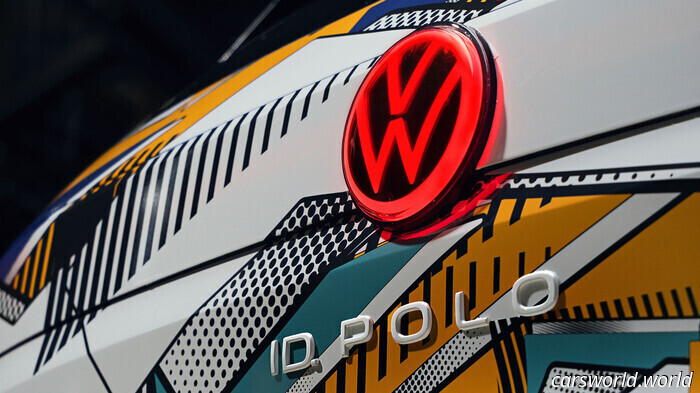 VW Promised a €25k ID. Polo, but You May Have to Wait Some Time to Experience It | Carscoops
The electric hatch is set to debut in 2026, but preliminary models are expected to be priced around €30,000, according to one report.
VW Promised a €25k ID. Polo, but You May Have to Wait Some Time to Experience It | Carscoops
The electric hatch is set to debut in 2026, but preliminary models are expected to be priced around €30,000, according to one report.
Tesla Owners Are Equipping Escape Tools Before It's Too Late | Carscoops
In many Teslas, the manual release handles are situated deep within the vehicle, prompting drivers and passengers to prepare for emergencies by creating their own solutions.