

Why Do Artificial Gear Shifts in Electric Vehicles Frustrate People So Much?
Hyundai
The most important car news and reviews, straight to the point.
Our complimentary daily newsletter delivers the most significant stories to you every weekday.
I’m in the passenger seat of the 2027 Genesis GV60 Magma, the electric performance crossover from the Korean brand that’s both vibrant and eye-catching. The driver is the experienced endurance racer and the newest member of Genesis Magma Racing, Dani Juncadella. We’re at Circuit Paul Ricard in southern France, and despite the picturesque setting, marble-sized snowflakes are falling on the windshield. He engages launch control, and we take off from the starting line, speeding into the first turn. Amid the chaos of being tossed around, I lose track of the fact that we're in an electric vehicle.
Why is that? The GV60’s interior is filled with a powerful roar that rises and falls as Juncadella manipulates the paddle shifters and presses the accelerator, making the powertrain sound and respond just like a gasoline engine with a traditional transmission. Except it doesn’t have one. Instead, it features a “Virtual Gear Shift System,” which immitates the sound and driving experience of an eight-speed dual-clutch transmission found in internal combustion engine vehicles. And it does this impressively well.
This technology isn’t new. A similar system with a different name is present in the Hyundai Ioniq 5 N and 6 N and has also been well-received by critics, including us. However, what is new is the intense backlash the concept of artificial shift points in electric vehicles is generating lately. Following our report that Porsche plans to emulate Hyundai's approach and incorporate a similar system in their electric models, forums and social media exploded with fans and electric vehicle enthusiasts denouncing the idea as foolish, expressing their disdain, and declaring they would never purchase a Porsche (as if that was genuinely on the table).
On the r/technology subreddit, one pro-electric vehicle commenter claimed that only someone “next-level stupid” would want fake gear shifts, while another likened it to grocery carts with plastic car cockpits for children. On r/electricvehicles, someone imagined if Henry Ford had designed the Model T to drop “simulated manure” for those who preferred horses. In r/Porsche, many expressed concern that their cherished brand was investing research and development resources in something deemed unnecessary. On r/cars, one user compared it to “putting playing cards in bicycle spokes… pitiful.” The term “pathetic” was frequently mentioned across various discussions.
Strong opinions abound on the internet, but this reaction stood out. It’s uncommon to witness such a unified response from two opposing viewpoints, especially over an entirely optional software feature that doesn't add weight or complexity, and aims to enhance the driving experience of those accustomed to gasoline vehicles. If I hadn’t provided context, could you guess which subreddits the previous comments originated from? This prompted us to consider: what is the root of this animosity? Is it about superiority of internal combustion engines? Is it about superiority of electric vehicles? Or is it a bizarre blend of both?
You might assume that the GV60 could never deceive you, but the reality is, it can. Engineers from Hyundai and Genesis effectively synchronized the relationship between the pedals, paddle shifters, the sounds coming through the speakers, and the motors' responses in each “gear.” It hits the (non-existent) rev limiter, reacts with hard shifts, and lags if you shift up too early.
At Circuit Paul Ricard, as we approach the famed esses, Juncadella downshifts just like in any other sports car—utilizing the drivetrain’s regenerative braking to decelerate the car and prepare the suspension for the corner entry—before making the full turn and accelerating again. The downshifts are crisp, the nuanced throttle control is entirely perceptible, and Juncadella’s throttle adjustments mid-corner contribute to a hyper-realistic simulation. While it’s artificial, I can’t help but think that if you aim to attract a broader audience who may dismiss electric vehicles as lacking character, this is the way to go. Make it relatable, make it thrilling, make it enjoyable.
The reality is, car enthusiasts rarely complain when a manufacturer offers a genuine manual transmission in a gasoline vehicle, even if it makes the car slower compared to a dual-clutch option. However, many electric vehicle enthusiasts reacted similarly—questioning why one would want something that disrupts the seamless torque delivery. Why would manufacturers intentionally degrade a car's performance to please uninformed buyers? Meanwhile, numerous internal combustion engine fans, who would welcome a manual transmission for enhanced driver engagement, are rejecting artificial gear shifts intended for that same purpose.
Watch the video above and form your own opinion. Some may argue it’s scarcely a step above a video game, but it isn’t. Unlike in a game, real-world actions have tangible consequences. Shift down too many times


Other articles
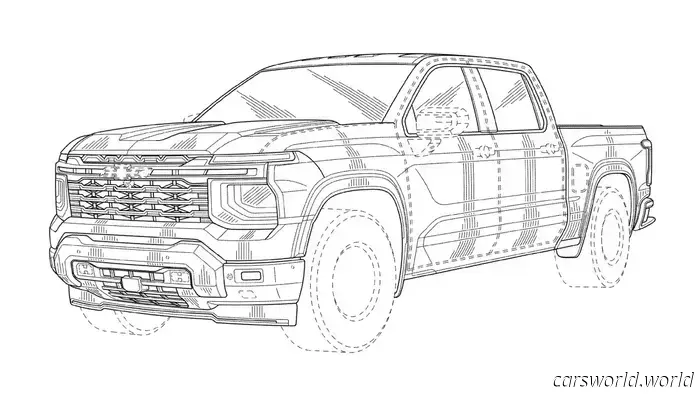 Federal Government Leaks New 2027 Chevrolet Silverado
The design for the new Chevy Silverado was revealed in a filing with the U.S. Patent and Trademark Office that was made public last week.
Federal Government Leaks New 2027 Chevrolet Silverado
The design for the new Chevy Silverado was revealed in a filing with the U.S. Patent and Trademark Office that was made public last week.
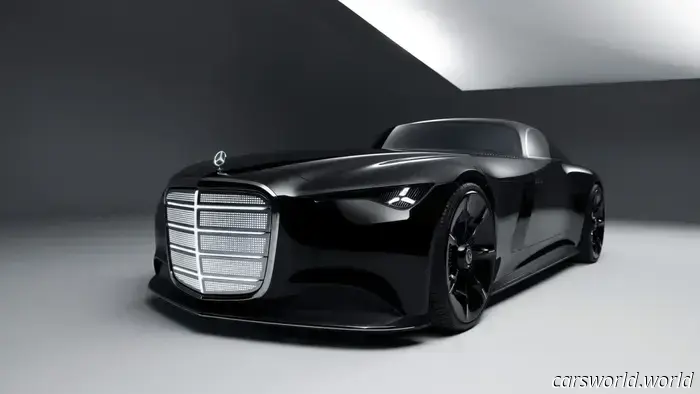 Mercedes-Benz is on the brink of launching a new design era: TDS.
After 18 years, Mercedes-Benz will appoint a new individual to lead its design department.
Mercedes-Benz is on the brink of launching a new design era: TDS.
After 18 years, Mercedes-Benz will appoint a new individual to lead its design department.
 NASCAR driver Greg Biffle and his family died in a plane crash in North Carolina.
Numerous sources have now verified that the former NASCAR driver and his family were aboard a plane that went down in North Carolina.
NASCAR driver Greg Biffle and his family died in a plane crash in North Carolina.
Numerous sources have now verified that the former NASCAR driver and his family were aboard a plane that went down in North Carolina.
 Lexus aims for the new LFA to "redefine the audio experience of an electric sports car."
The order was issued directly by chairman Akio Toyoda.
Lexus aims for the new LFA to "redefine the audio experience of an electric sports car."
The order was issued directly by chairman Akio Toyoda.
 EU Withdraws Ban on Sales of Gas-Powered New Cars by 2035: TDS
The new goal is to achieve a 90% reduction in car CO2 emissions by 2035.
EU Withdraws Ban on Sales of Gas-Powered New Cars by 2035: TDS
The new goal is to achieve a 90% reduction in car CO2 emissions by 2035.
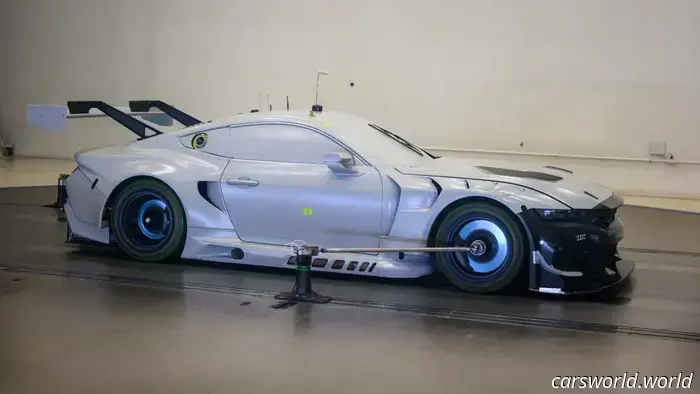 Ford's Mustang GT3 Evolution Might Hint at a Faster, Corvette-Defeating GTD
The Ford Mustang race has been updated and enhanced. Will the GTD utilize these new capabilities in competition with the Corvette ZR1?
Ford's Mustang GT3 Evolution Might Hint at a Faster, Corvette-Defeating GTD
The Ford Mustang race has been updated and enhanced. Will the GTD utilize these new capabilities in competition with the Corvette ZR1?
Why Do Artificial Gear Shifts in Electric Vehicles Frustrate People So Much?
Our report about Porsche introducing artificial gear shifts in its electric vehicles sparked strong reactions from both electric vehicle enthusiasts and traditional car lovers.