
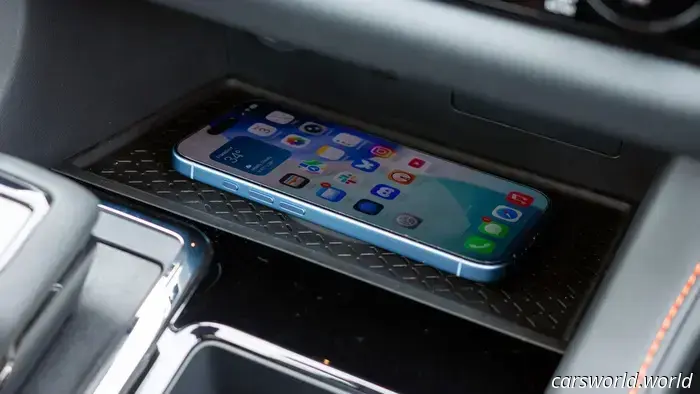
The Wireless Charger in the new Nissan Pathfinder is the first to genuinely get it right.
Adam Ismail
The most significant car news and reviews, no nonsense.
Subscribe to our free daily newsletter that delivers the most important stories straight to you every weekday.
I’ll take a guess and say that if your vehicle comes with a wireless charger, it’s probably slow and inconsistent, and you might not enjoy using it. (McLaren owners might feel differently.) There are several reasons for this. Manufacturers make extensive efforts to create trays to hold devices in place, but they often fall short. Additionally, wireless charging loses a significant amount of energy as heat; when combined with the power demands of Bluetooth streaming and navigation, it results in your phone becoming warm and unresponsive. Thankfully, significant improvements are on the way for in-car wireless charging, and the 2026 Nissan Pathfinder provides a glimpse of that future.
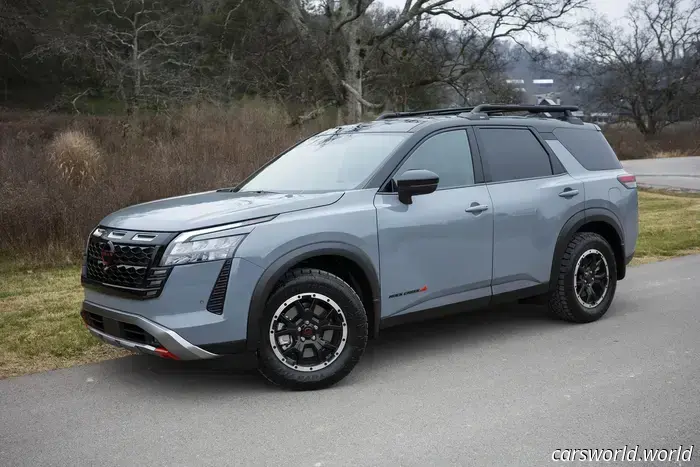
When Nissan initially revealed details about the Pathfinder's upcoming refresh, they stated that the new SUV would include an upgraded wireless charger with a magnetic mounting system and cooling fans. Honestly, my reaction was indifference; for years, manufacturers have claimed they’ve acknowledged customer feedback and finally perfected this, but they haven’t even come close. However, the new Pathfinder and Murano are the first vehicles in the U.S. to utilize the new Qi2 wireless charging standard, which seems to be the long-overdue solution to this issue.
I had the opportunity to test the new system in a 2026 Pathfinder yesterday. While I can't share driving impressions just yet, I can comment on the charger, which I believe is more significant than many realize. The Qi2 standard operates at a higher wattage than the basic Qi systems currently found in cars—15 watts instead of 5 watts. While you might still charge faster using a wired 15W brick rather than a pad due to the inefficiency of inductive charging, this still represents a noticeable improvement.
The critical factor is that the wattage doesn’t matter if the phone can’t stay positioned on the coils, which is where Qi2's real innovation comes into play: magnets. The Wireless Power Consortium—which includes Apple, Google, Samsung, and various other tech companies aiming to create common standards—partnered with Apple's MagSafe engineers to agree on magnet positioning, ensuring that all Qi2-equipped phones, regardless of the manufacturer, will be properly aligned on a Qi2 pad.
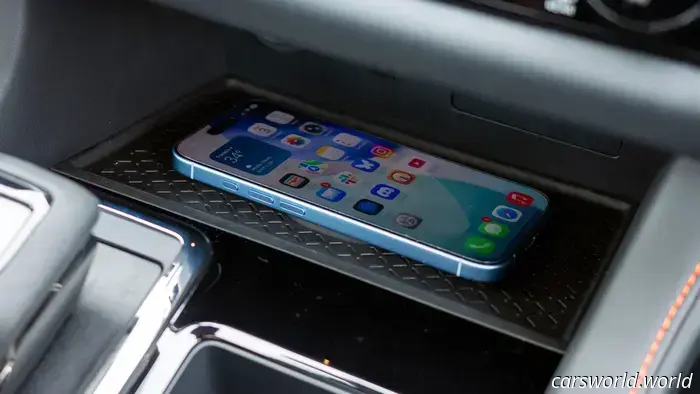
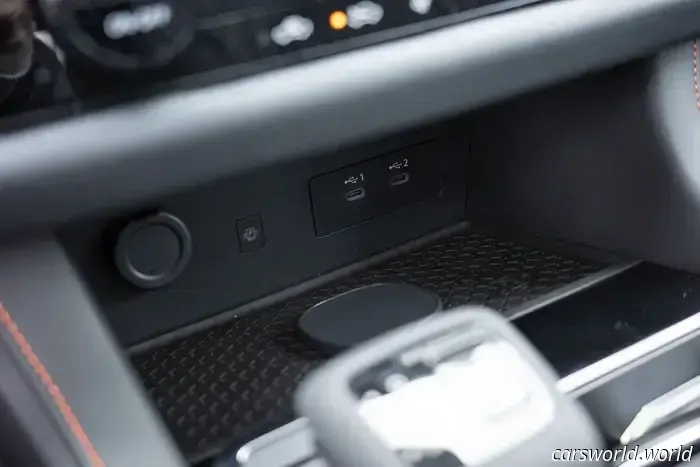
And those magnets are strong—seemingly more robust than MagSafe, which has not been entirely suitable for automotive use. The Pathfinder’s design features a raised puck that I initially didn’t realize was magnetized. That was my oversight, as my iPhone 17 is currently in an inexpensive case lacking its own magnets. Once I figured it out, I removed my phone from the case and placed it directly on the charger. Sure enough, it secured firmly. The small puck has tiny vents along its sides, which I suspect are part of the cooling mechanism.
In an ideal world, the tech and automotive industries would have resolved these issues long ago. The lengthy product cycles in the automotive industry don’t help, which is why this specification, established midway through 2023, is only now being introduced in vehicles. Still, as someone who had long lost hope for effective in-car wireless charging, I’m just glad we are finally making progress. If manufacturers could also provide a way to retrofit older cars with functional new pads, we would truly be making strides.
Adam Ismail
Have a tip? Email us at [email protected]
Other articles
 Gas Prices Decline to Levels Not Seen in America Since 2021 | Carscoops
Low crude prices and weak demand have driven pump prices below $3 for the first time since the start of the decade.
Gas Prices Decline to Levels Not Seen in America Since 2021 | Carscoops
Low crude prices and weak demand have driven pump prices below $3 for the first time since the start of the decade.
 Crown Vics with 10-Speed Transmissions? This Workshop Claims It’s the Way Forward.
Transitioning from a four-speed automatic to a 10R80 opens up a completely new realm of performance and driving experience.
Crown Vics with 10-Speed Transmissions? This Workshop Claims It’s the Way Forward.
Transitioning from a four-speed automatic to a 10R80 opens up a completely new realm of performance and driving experience.
 Viral Arrest of Teen Girl in Mustang Sparks Concerns Over Officer’s Behavior | Carscoops
A viral video of a garage arrest could weaken the felony fleeing charge against a teenage driver in Florida.
Viral Arrest of Teen Girl in Mustang Sparks Concerns Over Officer’s Behavior | Carscoops
A viral video of a garage arrest could weaken the felony fleeing charge against a teenage driver in Florida.
 Toyota Customer Claims A Standard Pickup Resulted In A Life-Altering Injury | Carscoops
A customer is suing a Massachusetts dealership and a door manufacturer following a reported malfunction of a service bay door that resulted in serious head and brain injuries.
Toyota Customer Claims A Standard Pickup Resulted In A Life-Altering Injury | Carscoops
A customer is suing a Massachusetts dealership and a door manufacturer following a reported malfunction of a service bay door that resulted in serious head and brain injuries.
 Cities: Skylines II is unexpectedly a car game—and it’s actually improved.
The city simulator that was released two years ago in a somewhat problematic condition is now finally in a satisfactory state.
Cities: Skylines II is unexpectedly a car game—and it’s actually improved.
The city simulator that was released two years ago in a somewhat problematic condition is now finally in a satisfactory state.
 GM's Mary Barra Commits to Cleaner Engines, Yet Relaxed Regulations Encourage More Fuel-Consuming Vehicles | Carscoops
Mary Barra states that GM is still dedicated to efficiency and electric vehicles, despite the changes in U.S. standards that alter incentives.
GM's Mary Barra Commits to Cleaner Engines, Yet Relaxed Regulations Encourage More Fuel-Consuming Vehicles | Carscoops
Mary Barra states that GM is still dedicated to efficiency and electric vehicles, despite the changes in U.S. standards that alter incentives.
The Wireless Charger in the new Nissan Pathfinder is the first to genuinely get it right.
I caught a sight of the upcoming developments in in-car wireless charging, and I'm happy to report that it finally appears promising.