
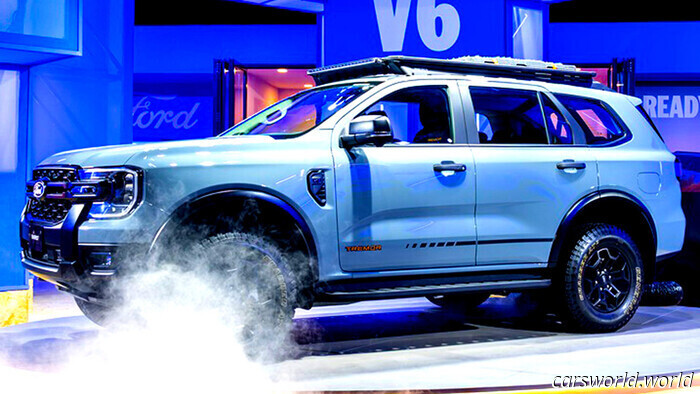
The 2026 Everest Tremor makes its debut in Abu Dhabi featuring a twin-turbo V6 engine, significantly enhancing performance compared to its diesel variants in a market-specific launch. Ford has introduced a new Everest Tremor version tailored for buyers in the Middle East. The 2.7-liter twin-turbo gasoline V6 engine produces an impressive 350 hp. This ladder-frame SUV is equipped with Tremor Bilstein suspension and all-terrain tires. The Ford Everest, the durable SUV counterpart of the Ranger that hasn’t reached the U.S. market, now showcases its most potent version to date. This upgrade brings it closer to the sought-after Everest Raptor, as the latest Tremor trim is now equipped with a gasoline V6 engine. However, there is a limitation; this variant is restricted to select markets, with Ford confirming its exclusivity to the Middle East. The 2026 Ford Everest Tremor was unveiled at the Liwa International Festival in Al Dhafra, Abu Dhabi, and retains most of its visual identity. On the exterior, it resembles the Australian version of the Tremor launched last year, featuring Bilstein suspension, a 26 mm (1-inch) lift, a Rock Crawl mode, and black 17-inch wheels fitted with General Grabber AT3 all-terrain tires. What Changed Underneath The significant update is found under the hood. The Middle Eastern model replaces the standard engines with a twin-turbo 2.7-liter V6 EcoBoost, coupled with a 10-speed automatic transmission and a standard four-wheel-drive system. This engine is not new, as it is already used in the F-150 and powers the U.S.-spec Ranger in XLT and Lariat trims. It also shares a close relationship with the more powerful 3.0-liter V6 used in the Ranger Raptor. In the Everest Tremor, this twin-turbo V6 produces 350 horsepower (261 kW / 355 PS) and 500 Nm (369 lb-ft) of torque, making it the most powerful Everest to date. In comparison, the Australian version’s 3.0-liter V6 turbodiesel generates less power at 247 hp (184 kW / 250 PS), though it provides greater torque at 600 Nm (442.5 lb-ft). According to the company, this configuration boasts “class-leading power and torque,” giving it a competitive advantage over the Everest’s direct rivals. These competitors include well-known ladder-frame SUVs such as the Toyota Land Cruiser Prado and Fortuner, Mitsubishi Montero Sport, Isuzu MU-X, and Nissan X-Terra. In this context, the introduction of the V6 positions the Everest Tremor more favorably, at least on paper. In addition to the Tremor, the 2026 Everest lineup for the Middle East features the Active, Sport, and Platinum trims. These models incorporate the same updates introduced in their Australian equivalents, a reasonable result since they are all produced on the same assembly line in Thailand.
A concerning trend is surfacing following fatal Tesla crashes where victims were unable to open the doors, raising questions about design choices across the industry.
Fatal accidents involving Teslas with unopenable doors are receiving increased attention.
At least 15 fatalities have mentioned the door situation as a potential contributing factor.
More than half of these incidents occurred in the last year.
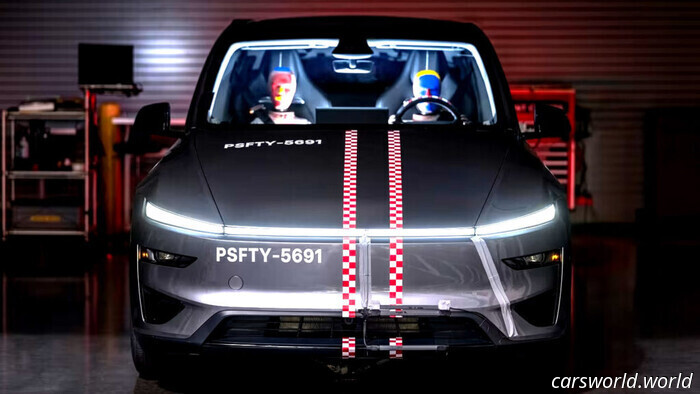
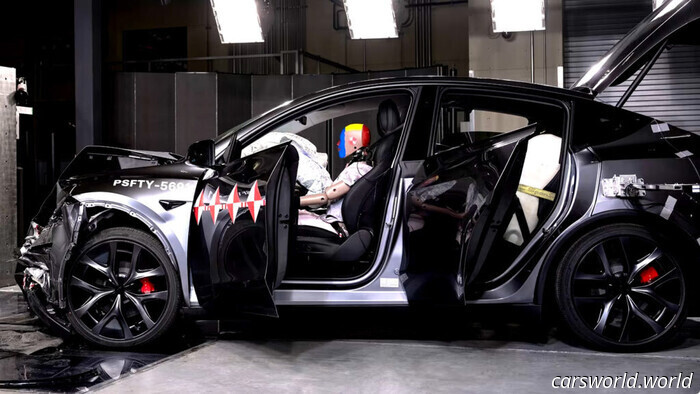
A recent report has highlighted a disturbing trend in the US regarding fatal Tesla crashes, where passengers were trapped inside due to their inability to open the doors. As Tesla’s electric vehicles become more prevalent on American roads, scrutiny regarding their safety features—particularly the absence of physical fail-safes in the event of a collision—is intensifying.
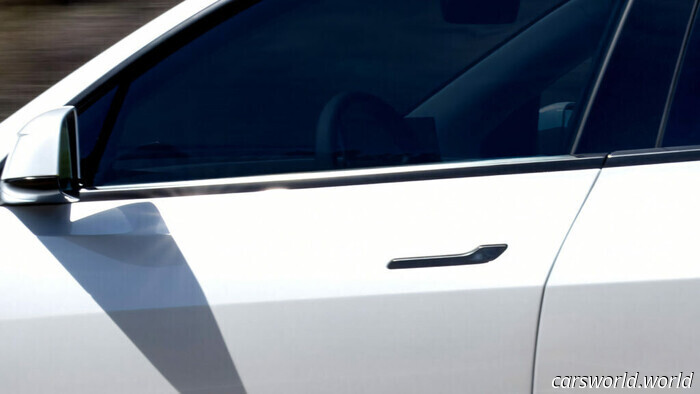
The investigation focuses on Tesla’s electronic door handles, a distinctive design aspect that has been adopted by various other car manufacturers, sparking concerns about a sector-wide trend that relies on software-dependent safety features.
In an ongoing investigation into the safety implications of these door handles, Bloomberg uncovered that at least 15 individuals have died over the past ten years in Tesla-related incidents where locked or malfunctioning doors were implicated in preventing escape.
Over half of these fatalities occurred within the past year, indicating that this issue may be becoming more frequent or noticeably recognized as awareness increases.
Understanding the Data
The report does note a significant limitation: there is no federal database tracking deaths specifically associated with electronic door handle failures. Thus, the findings are not intended to be definitive or comprehensive.
Rather, Bloomberg compiled its list by examining every known fatal electric vehicle fire incident in the US and assessing whether it was indicated that doors were inaccessible to both occupants and emergency personnel.
In each of the 15 cases identified, malfunctioning door handles were reported as having “hindered either the occupants’ attempts to escape or the rescuers’ efforts to save those inside the vehicle.”
One incident occurred in Virginia when a Tesla Model 3 lost control on a snowy highway, crashed into a tree, and caught fire. Footage from the responding patrol car showed that the officer could not open the Model 3's door and had to break a window to rescue the driver.
Audio from the Incident
One tragic crash took place in Wisconsin last year, claiming the lives of five individuals in a Tesla Model S. Audio from three 911 calls was later obtained, including one triggered automatically by an occupant’s Apple Watch.
In the recordings, at least two occupants can be heard pleading for help, with one clearly stating, “I’m stuck,” as fire engulfed the vehicle, ultimately leading to their deaths. It remains unclear if the other three victims survived the initial collision before the fire consumed the vehicle.
Tesla’s Reaction to Design Issues
Tesla seems to have subtly recognized these concerns. In September, it was reported that the company was considering changes to its door handle system. Future models may incorporate a blend of electronic and manual release mechanisms, which are already standard in brands like Audi and Lexus.
In an effort to reassure customers about the safety of its cars, Tesla recently launched a dedicated safety page on its website. Here, the company details that its vehicles are designed to automatically activate hazard lights and unlock doors during serious collisions, and that the vehicle can autonomously contact emergency services.
However, Tesla includes an important disclaimer: these features “may not be available in all regions or for all vehicles based on build date.”
While Tesla seems to be taking steps to address these concerns for the future, questions persist regarding not only the company’s design decisions but also the regulatory framework and the lack of clear oversight. The analysis doesn’t assert that electronic door handles are categorically unsafe, but it does highlight the need for more reliable fail-safes in scenarios where delays can prove fatal.
Other articles
 Mary Barra’s Position Might Transition to a Former Tesla Executive | Carscoops
Sterling Anderson, a former executive at Tesla and Aurora, could potentially head GM in the future if he succeeds in delivering software and electric vehicles.
Mary Barra’s Position Might Transition to a Former Tesla Executive | Carscoops
Sterling Anderson, a former executive at Tesla and Aurora, could potentially head GM in the future if he succeeds in delivering software and electric vehicles.
 Ford’s Sturdiest Ranger SUV Introduces a Gasoline V6, But You’ll Require a Passport to Obtain It | Carscoops
The 2026 Everest Tremor makes its debut in Abu Dhabi featuring a twin-turbo V6 engine, significantly enhancing performance compared to its diesel counterparts in a region-specific introduction.
Ford’s Sturdiest Ranger SUV Introduces a Gasoline V6, But You’ll Require a Passport to Obtain It | Carscoops
The 2026 Everest Tremor makes its debut in Abu Dhabi featuring a twin-turbo V6 engine, significantly enhancing performance compared to its diesel counterparts in a region-specific introduction.
 Forklift Collides with Two Nissan Skyline GT-Rs at Laguna Seca | Carscoops
Owners of Nissan GT-Rs are taking legal action against Laguna Seca after their parked Skylines were struck by a telehandler during a red-flag interruption.
Forklift Collides with Two Nissan Skyline GT-Rs at Laguna Seca | Carscoops
Owners of Nissan GT-Rs are taking legal action against Laguna Seca after their parked Skylines were struck by a telehandler during a red-flag interruption.
 Cameras Recorded All Aspects of Your Vehicle and Shared Them Publicly | Carscoops
Public safety cameras constantly monitor vehicles and individuals, and security weaknesses are a significant concern.
Cameras Recorded All Aspects of Your Vehicle and Shared Them Publicly | Carscoops
Public safety cameras constantly monitor vehicles and individuals, and security weaknesses are a significant concern.
The 2026 Everest Tremor makes its debut in Abu Dhabi featuring a twin-turbo V6 engine, significantly enhancing performance compared to its diesel variants in a market-specific launch. Ford has introduced a new Everest Tremor version tailored for buyers in the Middle East. The 2.7-liter twin-turbo gasoline V6 engine produces an impressive 350 hp. This ladder-frame SUV is equipped with Tremor Bilstein suspension and all-terrain tires. The Ford Everest, the durable SUV counterpart of the Ranger that hasn’t reached the U.S. market, now showcases its most potent version to date. This upgrade brings it closer to the sought-after Everest Raptor, as the latest Tremor trim is now equipped with a gasoline V6 engine. However, there is a limitation; this variant is restricted to select markets, with Ford confirming its exclusivity to the Middle East. The 2026 Ford Everest Tremor was unveiled at the Liwa International Festival in Al Dhafra, Abu Dhabi, and retains most of its visual identity. On the exterior, it resembles the Australian version of the Tremor launched last year, featuring Bilstein suspension, a 26 mm (1-inch) lift, a Rock Crawl mode, and black 17-inch wheels fitted with General Grabber AT3 all-terrain tires. What Changed Underneath The significant update is found under the hood. The Middle Eastern model replaces the standard engines with a twin-turbo 2.7-liter V6 EcoBoost, coupled with a 10-speed automatic transmission and a standard four-wheel-drive system. This engine is not new, as it is already used in the F-150 and powers the U.S.-spec Ranger in XLT and Lariat trims. It also shares a close relationship with the more powerful 3.0-liter V6 used in the Ranger Raptor. In the Everest Tremor, this twin-turbo V6 produces 350 horsepower (261 kW / 355 PS) and 500 Nm (369 lb-ft) of torque, making it the most powerful Everest to date. In comparison, the Australian version’s 3.0-liter V6 turbodiesel generates less power at 247 hp (184 kW / 250 PS), though it provides greater torque at 600 Nm (442.5 lb-ft). According to the company, this configuration boasts “class-leading power and torque,” giving it a competitive advantage over the Everest’s direct rivals. These competitors include well-known ladder-frame SUVs such as the Toyota Land Cruiser Prado and Fortuner, Mitsubishi Montero Sport, Isuzu MU-X, and Nissan X-Terra. In this context, the introduction of the V6 positions the Everest Tremor more favorably, at least on paper. In addition to the Tremor, the 2026 Everest lineup for the Middle East features the Active, Sport, and Platinum trims. These models incorporate the same updates introduced in their Australian equivalents, a reasonable result since they are all produced on the same assembly line in Thailand.
A concerning pattern is developing following deadly Tesla accidents in which victims were unable to open the doors, prompting inquiries about design choices within the industry.