
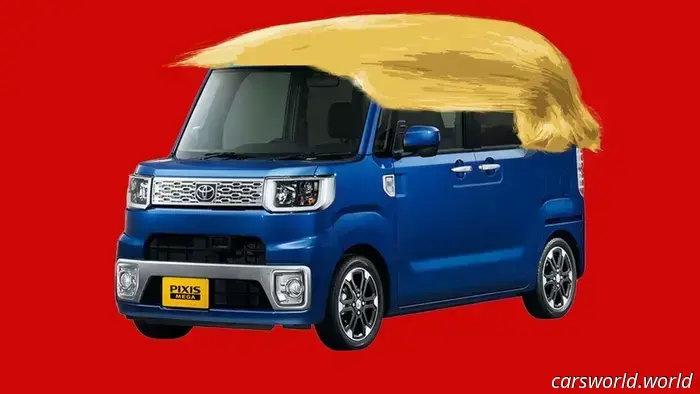
Why Trump's Request to Legalize Kei Cars in the US Is Misleading Information
Toyota, revised by the author
The latest news and reviews on cars, without the fluff.
Our free daily newsletter delivers the important stories right to your inbox every weekday.
Yesterday, President Trump outlined plans to relax the ambitious fuel-economy targets that automakers are expected to meet soon. In the same speech, he expressed his fondness for “small … cute” cars he saw during his recent trip to Japan, suggesting that “get ready for those cars,” as his administration is “clearing the way” for them to be manufactured here. Wait, what?
Today, there were numerous headlines regarding kei cars—the extremely small, low-cost, low-power vehicles that Mr. Trump was likely referencing—potentially coming to America due to his remarks. While I have a fondness for microcars and indeed anything adorable, I’m fairly certain that nothing will materialize from what we heard.
Here's the pertinent excerpt from yesterday's address.
President Trump stated:
“If you go to Japan, where I just left, and if you go to South Korea, and other countries, they have a very small car, sort of like the Beetle used to be with Volkswagen; they’re very small and really cute. I asked, ‘How would that do in this country?’ Everyone seems to think ‘good,’ but they’re not allowed to build them, and I’ve instructed the Secretary to immediately approve the production of those cars. Some Japanese companies do a beautiful job, but we’re not allowed to make them in this country.”
Transportation Secretary Sean Duffy then commented:
“He directed me to eliminate regulations on this, which we have done, so if Toyota or any other company wants to produce smaller, more affordable, fuel-efficient cars, we have cleared the way for them to manufacture and sell them in America.”
The specific term “kei car” was not mentioned; it seemed like Stellantis CEO Antonio Filosa may have said it at one point, but it likely was a miscommunication by automated captions. Regardless, Secretary Duffy’s statement lacked clarity. The only actual regulations preventing the production of ultra-small cars in the U.S. relate to crash-safety standards, which most kei-sized vehicles currently on the market would not meet.
The Trump Administration seems keen on reducing consumer protections, so today’s stringent safety standards might not pose a significant challenge, but they still exist. It’s not as if the production of kei cars will suddenly begin, allowing Toyota to start making a Pixis variant at one of its U.S. factories.
Even if crash testing were abolished and airbag requirements lifted, various factors remain that hinder kei cars as we know them from being mass-produced for the American market.
To begin with, it would take far too long for the price to be attractive enough for a sufficient number of customers to justify building factories. Americans have ultimately declined every ultra-small, budget-friendly car introduced to the market in recent decades—Smart, Toyota iQ, and even the highly practical Honda Fit was discontinued. Ford doesn’t even manufacture sedans anymore, let alone economical hatchbacks like the Fiesta.
So will people buy them because they have no other choice? Initially, they would continue purchasing used F-150s (or as Mr. Trump calls it, “the Ford 150”), as they would still be cheaper than a new Ameri-kei car.
Moreover, Americans typically don’t limit their car shopping to what they can afford. Car prices are unlikely to decrease, but we will certainly see extended loan terms and rising lease rates in the absence of regulation. The auto industry, like many others, focuses on recurring revenue streams. From a marketing standpoint, it is easier to place consumers in long-term debt for a new high-end pickup truck or offer a pay-per-mile plan than to sell them a Trum-bant microcar.
Trust me, I would be thrilled to see vehicles like the Suzuki Jimny and Honda Beat available in America, just like any other car enthusiast, but it’s not going to happen. One frustrating aspect of this situation is that Mr. Trump could meaningfully and quickly lower the cost of car ownership in the U.S. by simply removing the tariffs he imposed on vehicles and their parts for building and maintaining them. However, I am not particularly optimistic about that occurring either.
Have a story tip? Want to express your disagreement? My email is [email protected].
Other articles
 Cities: Skylines II is unexpectedly a car game—and it’s actually improved.
The city simulator that was released two years ago in a somewhat problematic condition is now finally in a satisfactory state.
Cities: Skylines II is unexpectedly a car game—and it’s actually improved.
The city simulator that was released two years ago in a somewhat problematic condition is now finally in a satisfactory state.
 Viral Arrest of Teen Girl in Mustang Sparks Concerns Over Officer’s Behavior | Carscoops
A viral video of a garage arrest could weaken the felony fleeing charge against a teenage driver in Florida.
Viral Arrest of Teen Girl in Mustang Sparks Concerns Over Officer’s Behavior | Carscoops
A viral video of a garage arrest could weaken the felony fleeing charge against a teenage driver in Florida.
 The Wireless Charger in the new Nissan Pathfinder is the first to genuinely get it right.
I caught a sight of the upcoming developments in in-car wireless charging, and I'm happy to report that it finally appears promising.
The Wireless Charger in the new Nissan Pathfinder is the first to genuinely get it right.
I caught a sight of the upcoming developments in in-car wireless charging, and I'm happy to report that it finally appears promising.
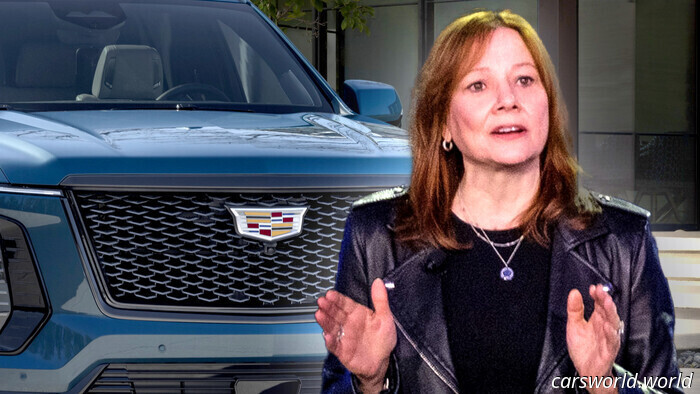 GM's Mary Barra Commits to Cleaner Engines, Yet Relaxed Regulations Encourage More Fuel-Consuming Vehicles | Carscoops
Mary Barra states that GM is still dedicated to efficiency and electric vehicles, despite the changes in U.S. standards that alter incentives.
GM's Mary Barra Commits to Cleaner Engines, Yet Relaxed Regulations Encourage More Fuel-Consuming Vehicles | Carscoops
Mary Barra states that GM is still dedicated to efficiency and electric vehicles, despite the changes in U.S. standards that alter incentives.
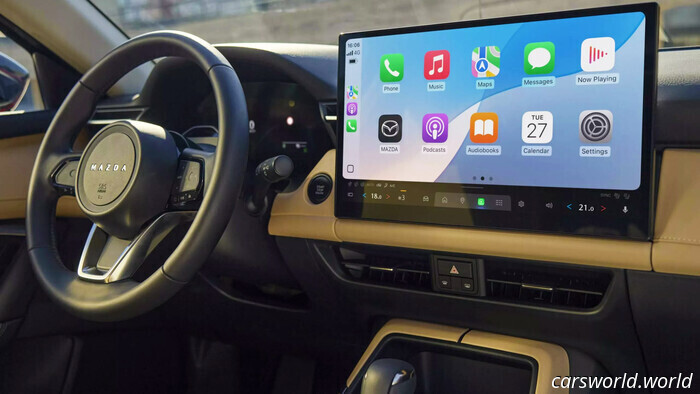 Mazda Fully Embraces a Massive Display and Eliminates Buttons for Its Newest SUV | Carscoops
The 2026 CX-5 replaces its physical buttons with a large touchscreen and AI controls, marking a controversial move towards entirely digital driving.
Mazda Fully Embraces a Massive Display and Eliminates Buttons for Its Newest SUV | Carscoops
The 2026 CX-5 replaces its physical buttons with a large touchscreen and AI controls, marking a controversial move towards entirely digital driving.
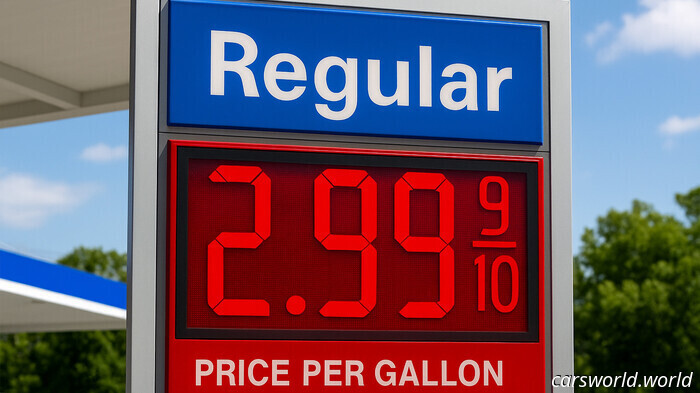 Gas Prices Decline to Levels Not Seen in America Since 2021 | Carscoops
Low crude prices and weak demand have driven pump prices below $3 for the first time since the start of the decade.
Gas Prices Decline to Levels Not Seen in America Since 2021 | Carscoops
Low crude prices and weak demand have driven pump prices below $3 for the first time since the start of the decade.
Why Trump's Request to Legalize Kei Cars in the US Is Misleading Information
In recent decades, American car purchasers have turned away from small cars. However, perhaps a Presidential mandate for "cute" vehicles could alter this trend.