
Project Motor Racing Never Should Have Departed from the Paddock
Giants Software
The most significant automotive news and reviews, no nonsense
Our free daily newsletter delivers the stories that truly matter to you every weekday.
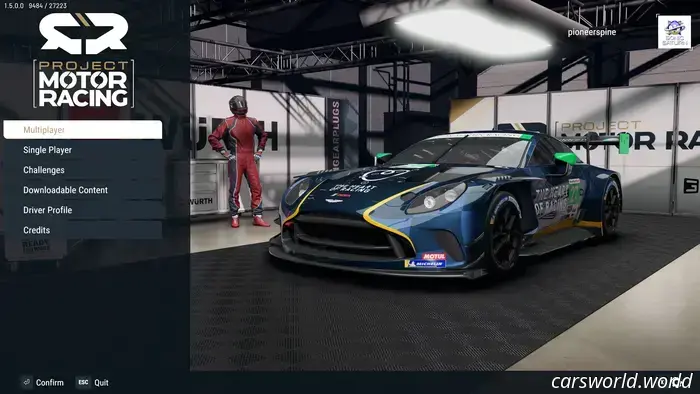
In 2020, Slightly Mad Studios, under the leadership of experienced sim racing developer Ian Bell, released Project CARS 3. This title marked a significant shift towards a more accessible, arcade-like experience, which, to put it mildly, was not well received by fans. A few years later, Slightly Mad was closed down by its new parent company, Electronic Arts, and Bell promised to return with a new simulation—one that emphasized genuine motorsport and a highly realistic physics engine. That game is Project Motor Racing, which launched this week. However, it’s not worth purchasing at this time.
At least, not for now. I take no pleasure in discussing a disappointing racing game, but Project Motor Racing, in its current form, is quite frustrating. If it had launched in Steam Early Access, I might have been more lenient, though I’d still prefer not to; too many publishers are abusing that option these days. But in that scenario, PMR would be priced lower than $60, or, heaven forbid, $90 for those opting for the first year of DLC included. There could have been a development roadmap and less content—although, content that functions properly.
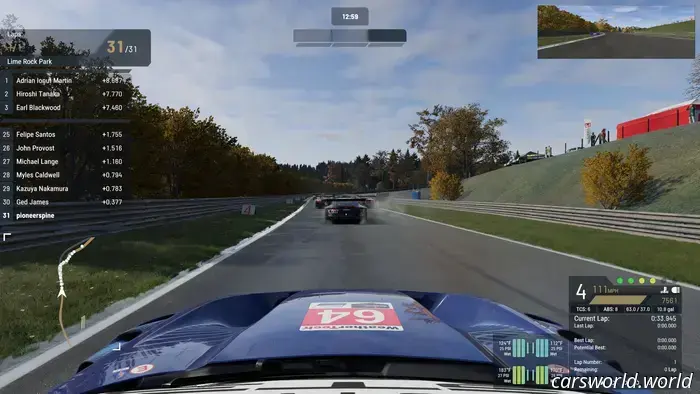
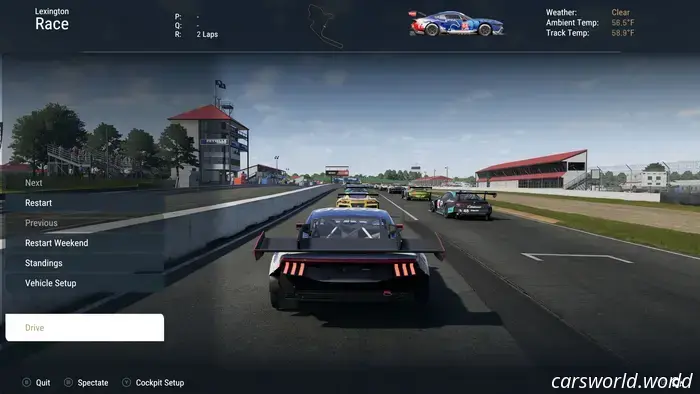
Currently, PMR is barely functional. I received my Steam PC code last Thursday, and immediately, the simple task of selecting a car signaled a rough experience ahead. The game would freeze every time I scrolled down the list, and once it unfroze, the car models loaded in bits and pieces, several body panels at a time. Then I foolishly launched a 32-car race at Lime Rock Park, where mostly high settings on my PC (featuring a Ryzen 7 5800X3D CPU and RX 9070 GPU) yielded a maximum of 20 frames per second, along with severe stuttering.
After that, I didn’t touch the PC version over the weekend. In the interim, I received a PS5 copy, which, to be fair, runs significantly smoother, even if it looks quite poor by comparison. Meanwhile, some Xbox players have struggled to even launch the game.
When I returned to my computer on Monday, there was an update, and I gleaned some tips from other reviewers to stabilize my experience. It turns out enabling V-sync, using the frame limiter, and switching to fullscreen mode (as opposed to borderless) disrupts performance. After making those adjustments, PMR operated at four times the framerate—though it had a temporal upscaling issue that made my car appear to drag around my desktop while Windows crashed.
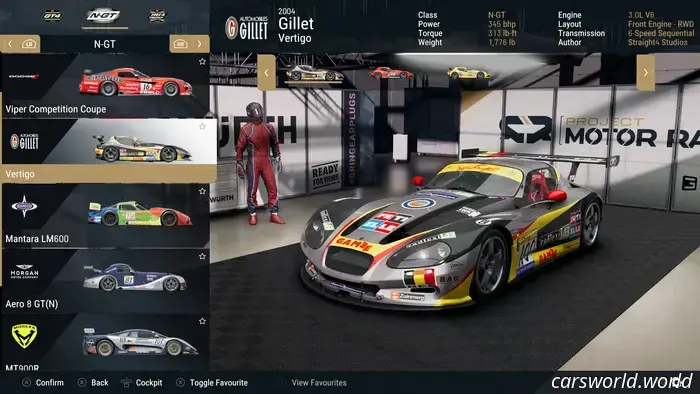
Eventually, I discovered this was due to having FSR 4 upscaling turned on in AMD’s GPU driver; after disabling that, I finally managed to complete a race without issues. Now, following another patch, the game runs at around 90 fps on my machine, which is great, though odd frame spikes still occur, especially when transitioning views. Additionally, cycling through cars in the menu continues to be strangely frustrating. While the panel-by-panel loading stopped at some point over the past week, now cars appear with a red haze, and the freezing persists.
Despite these concerns, the improvements have made PMR playable, allowing me to assess the physics and racing. If you’re looking for an opinion from someone who has tried numerous sims and even engaged in real-life motorsport, Jimmy Broadbent’s review is readily available. I was using an Xbox Series controller, which might invalidate what I’m about to say for some, and that’s perfectly fine.
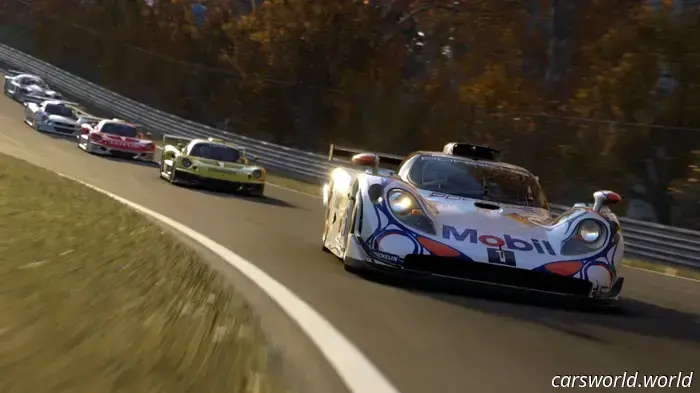
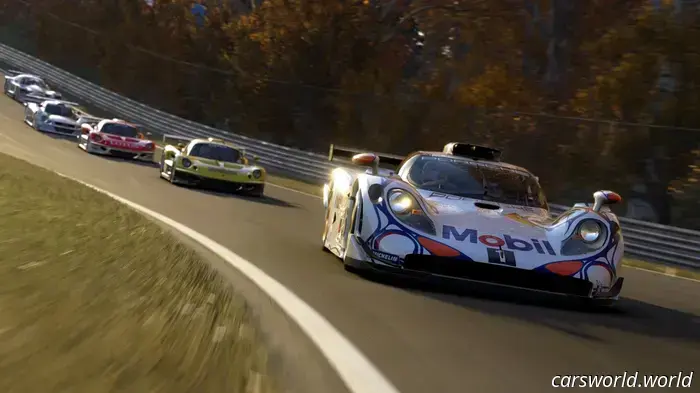
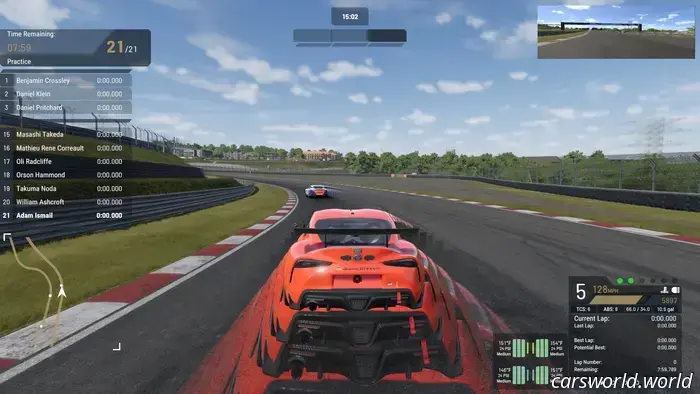
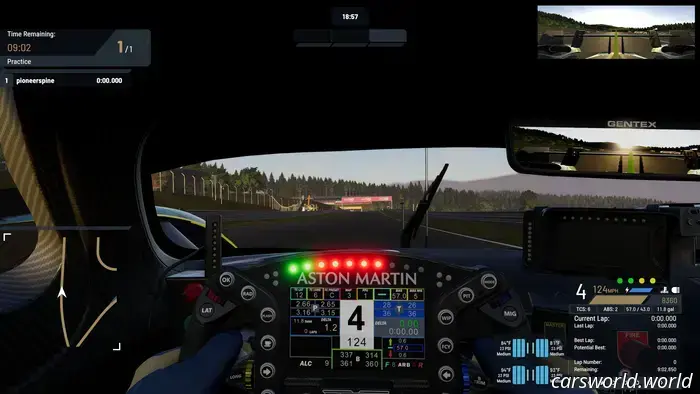
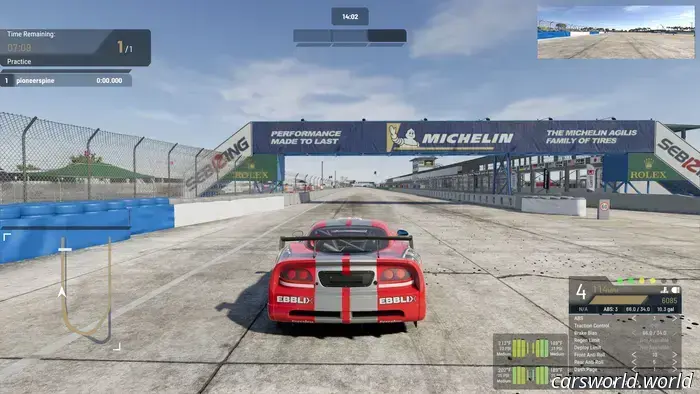
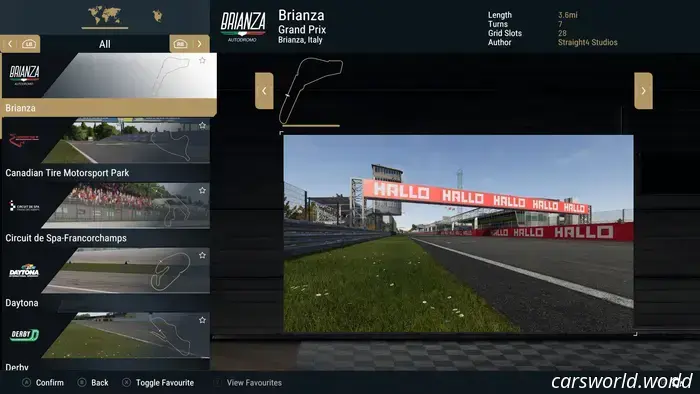
The graphics in Project Motor Racing range from unremarkable, with flat lighting, to decent. Every track can be driven in every season, which is a nice feature carried over from the Project CARS series.
I never expect simulators claiming to be as serious as PMR to perform well on a controller. Occasionally, they can surprise you. For instance, Assetto Corsa Rally caters primarily to wheel users, just like PMR, yet I found it incredibly enjoyable. I’ll stick my neck out and say that despite Project CARS 3's misleading marketing, it controlled excellently on a pad; it featured some of the best analog-stick steering in a non-Gran Turismo game from its generation.
However, the challenge arises when trying to make a sim feel too responsive on a controller; in the eyes of hardcore enthusiasts, it may not be perceived as a “real” sim. There needs to be some element of advantage for wheel players. Honestly, I can’t dispute that. I prefer developers to omit controller support entirely, as iRacing has done, rather than treating controller users as second-class players.
I evaluated PMR's somewhat tedious, “sticky” handling based on the idea that a good controller experience was simply not a priority. “Sticky”
Other articles
 Ferrari Claims 'The V6 Outperforms a V12': The Downshift
According to the project manager of the Ferrari F80, selecting a powertrain for Maranello's newest hypercar was surprisingly straightforward.
Ferrari Claims 'The V6 Outperforms a V12': The Downshift
According to the project manager of the Ferrari F80, selecting a powertrain for Maranello's newest hypercar was surprisingly straightforward.
 Elon Continually Proposes Tesla's FSD To Other Brands, Yet There's No Interest | Carscoops
Tesla claims that competing car manufacturers continue to turn down its Full Self-Driving system, while Elon Musk asserts that they are overlooking his numerous licensing proposals.
Elon Continually Proposes Tesla's FSD To Other Brands, Yet There's No Interest | Carscoops
Tesla claims that competing car manufacturers continue to turn down its Full Self-Driving system, while Elon Musk asserts that they are overlooking his numerous licensing proposals.
 28 Heartwarming Images of Jay Leno Enjoying Rides in His Numerous Cars
A tribute to Jay Leno for not just amassing a remarkable collection of more than 180 cars, but also for taking them out for a spin around town whenever he chooses.
28 Heartwarming Images of Jay Leno Enjoying Rides in His Numerous Cars
A tribute to Jay Leno for not just amassing a remarkable collection of more than 180 cars, but also for taking them out for a spin around town whenever he chooses.
 The Jeep Recon faces an issue that the IH Scout addressed back in the 1970s.
User-removable doors are an enjoyable feature of the Jeep, but the way the Recon implements them seems off. The Scout faced a similar issue 50 years ago, and its solution may still be applicable.
The Jeep Recon faces an issue that the IH Scout addressed back in the 1970s.
User-removable doors are an enjoyable feature of the Jeep, but the way the Recon implements them seems off. The Scout faced a similar issue 50 years ago, and its solution may still be applicable.
 Take advantage of Black Friday discounts on brand-name tires at Walmart now.
Walmart is offering discounts on select Goodyear and Cooper tires to help you acquire quality tires at a lower price during this Black Friday sale.
Take advantage of Black Friday discounts on brand-name tires at Walmart now.
Walmart is offering discounts on select Goodyear and Cooper tires to help you acquire quality tires at a lower price during this Black Friday sale.
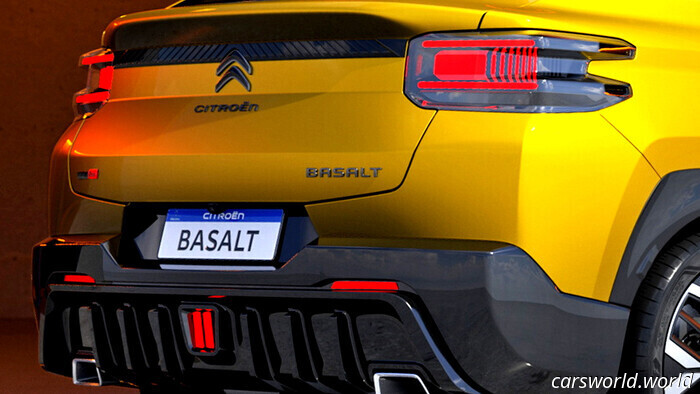 Citroen's Budget Fastback Appears Sporty Only When Stationary | Carscoops
The Citroen Basalt lowers its ride height, incorporates a large diffuser, and still manages to label itself as a concept.
Citroen's Budget Fastback Appears Sporty Only When Stationary | Carscoops
The Citroen Basalt lowers its ride height, incorporates a large diffuser, and still manages to label itself as a concept.
Project Motor Racing Never Should Have Departed from the Paddock
The spiritual successor to Project CARS is prepared for early access at most, but it needs significant improvements before it can warrant a $60 price tag.