
Disassembled 6.2L GM V8 Reveals Why It's Important Not to Overlook Warning Signs
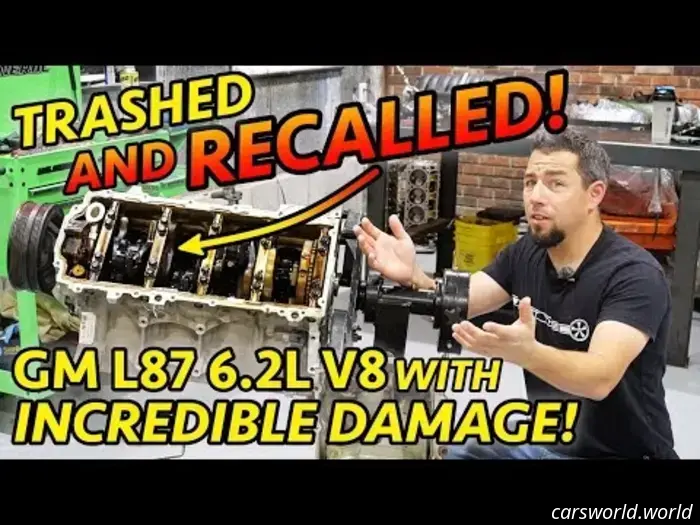
Chevy V8 failures have sparked considerable conversation recently. Earlier this year, we featured a video showing the disassembly of a discarded 6.2-liter GM L87 V8 that was taken from a nearly new Cadillac Escalade with very low mileage. While a low-mileage engine suddenly failing often makes for an intriguing visual, the autopsy in this instance turned out to be inconclusive. That was prior to the escalating V8 issues (apologies for the pun); GM now faces an official recall. With increased scrutiny, it was inevitable that some experienced mechanics would get a closer look. Indeed, YouTube mechanic Eric (I Do Cars) just examined one, and the damage is quite striking.
The video runs for almost an hour, but the actual teardown takes about 35 minutes. Before starting, Eric points out a few details. First, this engine came from a recalled GM SUV—a 2022 GMC Yukon Denali. Second, it has previously been opened up, as indicated by the discolored replacement oil pan. Third, and related, the engine can be turned by hand, showing that none of the internal parts are stuck.
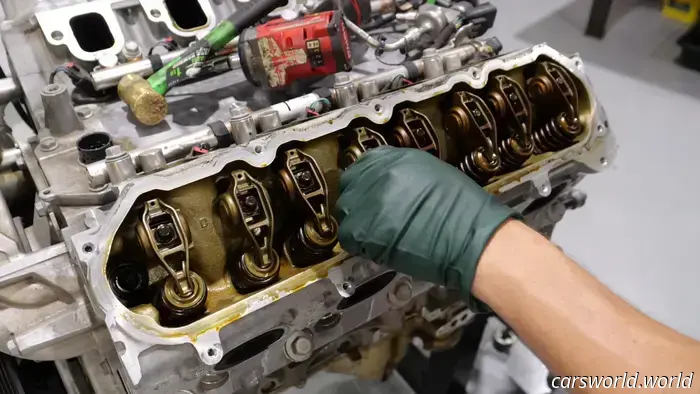
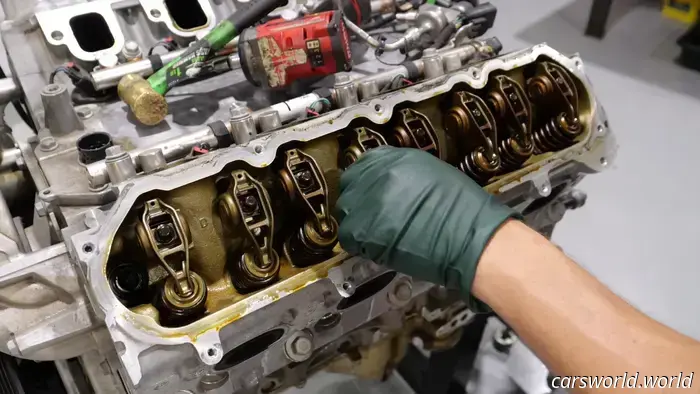
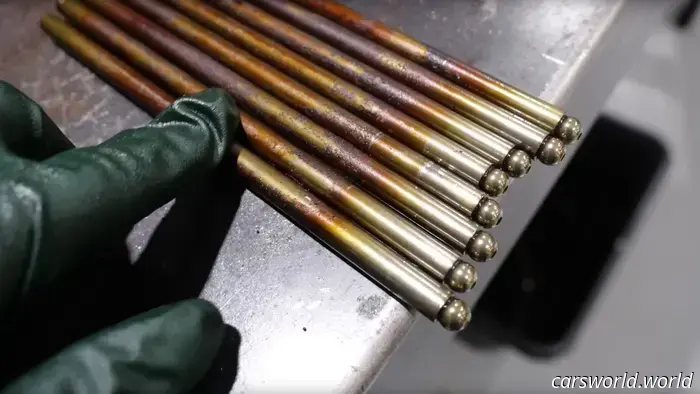
The process begins calmly, with Eric observing that the oil residue inside the engine seems normal, and there are no visible signs of debris—both positive indicators that some parts of this motor may be salvageable. The first indication of trouble arises from the pushrods, several of which exhibit unusual wear.
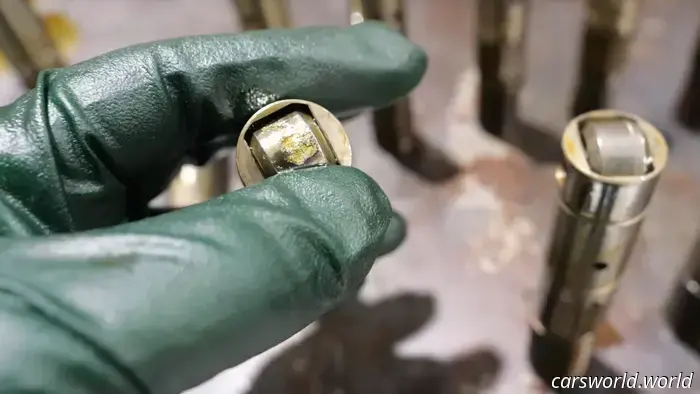
A more apparent issue emerges when he takes out the engine's lifters. While none of the lifters have collapsed, all exhibit signs of debris exposure, and one is significantly damaged, with a chunk missing from its roller (indicating that this component is failing).
When the oil pan is removed, the severity of the problem becomes clear. The previously seen maple syrup color in the engine has now turned to almost pure carbon black. The engine has been severely overheated, likely causing the lock-up, which Eric notes is only turning for him because some of the bolts securing the crank assembly to the block have already been loosened.
Have you ever seen a small-block with all eight of its connecting rod bearings completely worn out? Well, now you have. Additionally, one camshaft lobe has a noticeable chunk missing, and there are scoring marks on the front of the block from contact with the crankshaft. Despite the damage, most of the teardown proceeds quite smoothly.
Eric concludes that this particular recalled V8 failed more gradually than some owners have indicated. Insufficient lubrication would account for the excess heat buildup, resulting in the blackened oil varnish where components are connected to the crankshaft. He even speculates that the driver may have disregarded signs of engine deterioration and/or early failure for some time before it finally gave out.
While he refrains from pinpointing an exact cause of failure in this case, it is evident that this V8 exhibited several known issues related to GM. The company's recall notice indicated that wear-related failures are likely connected to machining defects with the engine's crankshaft and/or connecting rods—both of which were highlighted in this video.
Have you had experience with one of GM’s recently recalled 6.2-liter V8s? Feel free to contact us at [email protected] if you've encountered anything noteworthy!
Other articles
 It Cost $56,000 to Paint This Supercar in the Colors of a Cigarette Brand | Carscoops
This mid-engine supercar has only been used for 2,700 miles since its delivery.
It Cost $56,000 to Paint This Supercar in the Colors of a Cigarette Brand | Carscoops
This mid-engine supercar has only been used for 2,700 miles since its delivery.
 This Modest 2022 Corolla Defied Depreciation | Carscoops
The three-year-old XSE hatchback with 19,000 miles was sold for only $3,280 less than its initial MSRP.
This Modest 2022 Corolla Defied Depreciation | Carscoops
The three-year-old XSE hatchback with 19,000 miles was sold for only $3,280 less than its initial MSRP.
 Does Greater Power Than a Veyron Make This Electric SUV a Genuine AMG? | Carscoops
Yasa's next-generation electric motors could potentially make this the most powerful AMG vehicle ever.
Does Greater Power Than a Veyron Make This Electric SUV a Genuine AMG? | Carscoops
Yasa's next-generation electric motors could potentially make this the most powerful AMG vehicle ever.
 For $250, Transform Your Tesla Into a Launch Series Model | Carscoops
This new option was launched soon after Tesla reduced lease prices for the refreshed Model Y.
For $250, Transform Your Tesla Into a Launch Series Model | Carscoops
This new option was launched soon after Tesla reduced lease prices for the refreshed Model Y.
 A Decade Later, VW's Major Scandal Remains Unresolved | Carscoops
VW might have spent billions to overcome Dieselgate, but numerous executives are still facing significant issues.
A Decade Later, VW's Major Scandal Remains Unresolved | Carscoops
VW might have spent billions to overcome Dieselgate, but numerous executives are still facing significant issues.
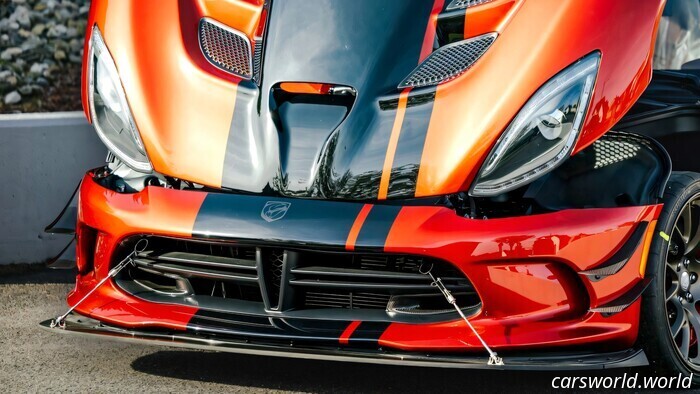 In 2017, an individual purchased this rare Dodge for $180,000, but never took it for a drive | Carscoops
The Viper ACR, with delivery mileage, features a stunning Stryker Orange color and is equipped with impressive options.
In 2017, an individual purchased this rare Dodge for $180,000, but never took it for a drive | Carscoops
The Viper ACR, with delivery mileage, features a stunning Stryker Orange color and is equipped with impressive options.
Disassembled 6.2L GM V8 Reveals Why It's Important Not to Overlook Warning Signs
Have you ever encountered a small-block engine with all eight of its connecting rod bearings entirely worn out? Take a look at this.